How the APEX-S100 Edge AI Server Improves Smart Port Operational Efficiency
As global trade volumes climb, ports face growing pressure to move more cargo while improving operational efficiency and sustainability. By integrating AI into terminal operations, smart ports can optimize resource allocation, strengthen situational awareness, and make faster, data-driven decisions in real time.
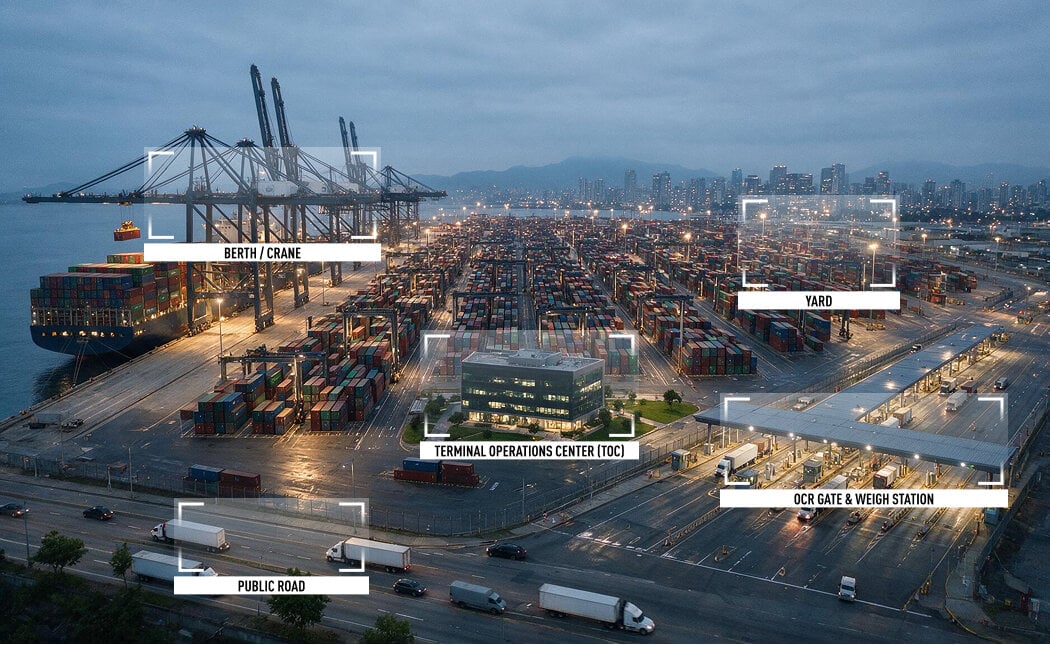
A leading container terminal operator in Southeast Asia deployed the Innodisk APEX-S100 edge AI server as the core AI computing platform for its smart port. Installed at the Terminal Operations Center (TOC), the system enables AI-powered berth planning, crane scheduling, vehicle dispatching, and video analytics. Together, these capabilities help optimize terminal operations, reduce operating costs, increase throughput, and strengthen long-term profitability.
| Industry | Logistics |
| End-Use Scenario | Smart Port Terminal Operations |
| Region | Southeast Asia |
| Innodisk Solution | APEX-S100 Edge AI Server |
Customer Profile
A major terminal operator in Southeast Asia, managing one of the region's busiest container terminals. Operating under a long-term concession agreement with the local port authority, the company handles high volumes of container traffic and plays a critical role in regional trade and logistics. To stay competitive and keep pace with growing cargo demand, the operator continuously looks for ways to improve terminal throughput, optimize resource utilization, and reduce vessel turnaround times.
Limited centralized operational management
Traditional management platforms often lack the AI capabilities needed to process massive volumes of real-time data across the terminal. Without centralized AI analytics, the Terminal Operations Center (TOC) struggles to monitor operations efficiently and coordinate resources.
Inaccurate vessel arrival estimates complicate berth allocation
Large gaps between estimated and actual vessel arrival times make it difficult to assign berths efficiently and coordinate terminal resources. These disruptions can lead to berth underutilization, vessel queuing, and increased congestion around the port.
Inefficient crane allocation limits cargo handling efficiency
Insufficient crane availability or poor resource allocation can slow loading and unloading operations. This reduces terminal throughput, increases vessel turnaround times, and ultimately impacts overall terminal productivity.
Unoptimized vehicle routing creates traffic congestion
High volumes of AGVs, terminal trucks, and gate traffic require continuous coordination. Without optimized vehicle routing and traffic management, congestion can quickly build up and disrupt cargo flow across the terminal.
Inefficient yard operations increase handling delays and safety risks
Locating, retrieving, and transferring containers across large yard areas is time-consuming and can slow downstream logistics. At the same time, unsafe behaviors — such as standing beneath containers during cargo handling — can be difficult to identify promptly, increasing safety risks in the yard.
Innodisk's modular portfolio spans five technology layers, including compute, memory, storage, sensing & communication, and software. By integrating these technologies into complete Edge AI Systems, Innodisk helps customers accelerate AI deployment while simplifying system integration. Designed with flexibility in mind, the systems offer configurable components and tailored customization services to support a wide range of AI applications for smart ports and beyond.
The APEX-S100 is a high-performance edge AI server powered by Intel® Xeon® 6 processors and supporting up to dual NVIDIA data center GPUs. Combining enterprise-grade computing power with a compact 2U short-depth design, it is primarily deployed in the Terminal Operations Center (TOC) to enable real-time decision-making and AI-driven operational intelligence. For compute-intensive workloads, it can also be deployed at distributed edge locations such as the yard, berth, or OCR gate to deliver low-latency AI processing where it is needed most.
Key Specifications Processor CPU Options: Intel® Xeon® 6 processor AI Accelerator GPU Options: Dual NVIDIA H200 / RTX PRO 6000 Blackwell Server Edition Memory/Storage Up to 1T DDR5 6400 MT/s RDIMM, 2 × 4TB E1.S, 2 × 2TB M.2 SSD Ethernet 2 × 10Gbps by Intel X710-T2 or 2 × 100Gbps by BlueField-3 B3220 Physical Characteristics Dimension L × W × H (mm): 438 × 420 × 88 What Makes It Different
 |
AI-Powered Terminal Operations Center
As smart ports become increasingly digitalized, the Terminal Operations Center (TOC) has evolved from a monitoring hub into the operational brain of the entire port. By integrating the Terminal Operating System (TOS), Port Community System (PCS), weather and tide data, customs systems, and real-time operational information, the TOC provides a unified platform for coordinating operations across the port.
Resources such as tugboats and pilots are typically shared across multiple terminal types — from container terminals to passenger and smaller logistics terminals — so the TOC must weigh port-wide conditions before dispatching them, alongside coordinating berth planning and the movement of vessels, cranes, AGVs, and terminal trucks.
Serving as the AI computing backbone of the TOC, the Innodisk APEX-S100 is built on a server-grade architecture designed for continuous 24/7 operation, centralized management, multi-application processing, and seamless integration with multiple operational systems. The platform provides a centralized AI foundation for berth planning, crane scheduling, vehicle dispatching, and intelligent video analytics across the container terminal.
AI-Powered Berth Planning
Efficient berth allocation is critical to smart port operations, as inaccurate vessel arrival estimates can lead to berth underutilization, vessel queuing, and unnecessary congestion.
To improve berth utilization, the smart port implemented a Just-in-Time Arrival (JIT Arrival) strategy. By feeding real-time AIS (Automatic Identification System) data into the TOC, the system continuously tracks vessel positions, predicts berth availability, and issues updated arrival recommendations to incoming vessels. This lets ships optimize sailing speed before reaching port, cutting anchorage waiting time, fuel consumption, and congestion.
Powered by Intel® Xeon® 6 processors with support for up to 1TB of DDR5 memory, the APEX-S100 efficiently processes massive volumes of real-time AIS and operational data, enabling more accurate berth prediction and better-coordinated terminal operations.
Smarter Ship-to-Shore Crane Scheduling
Every container vessel may carry hundreds or even thousands of containers, each requiring different cranes depending on vessel size, container type, and cargo location. Idle cranes waste resources, while insufficient crane availability drives up vessel turnaround time.
To maximize crane utilization, the TOC runs an AI scheduling system that automatically determines unloading sequences, assigns the most suitable STS crane to each task, and, where permitted, optimizes loading, unloading, and bunkering operations at the same time.
With support for up to dual NVIDIA GPUs, the APEX-S100 gives the TOC the parallel processing power to run crane scheduling alongside multiple other AI workloads at once — from vision-based load verification to real-time data fusion — so crane assignments can be recalculated instantly as conditions change across the berth, without slowing down other AI-driven port operations.
AI Dispatch for Smoother Terminal Traffic
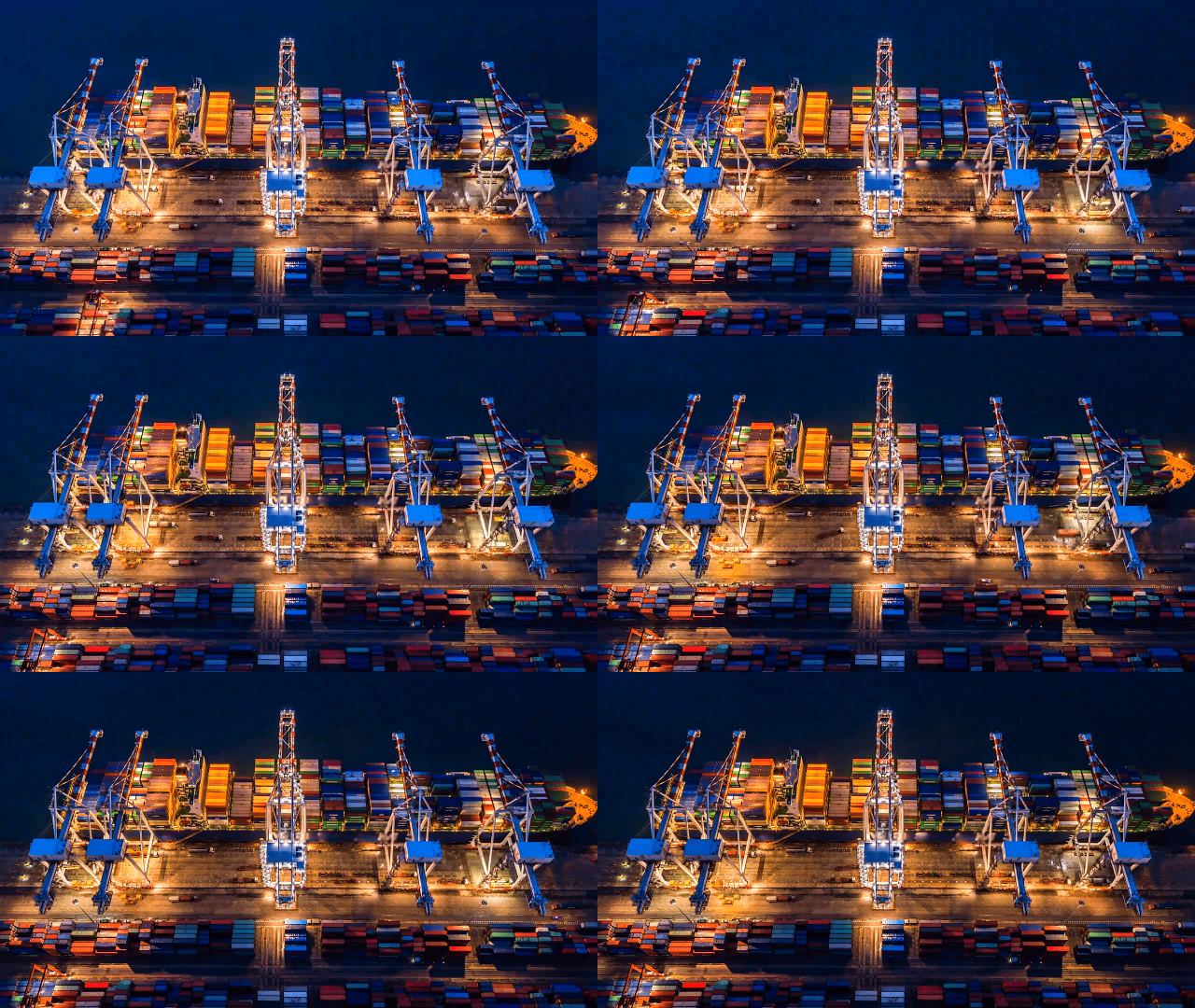
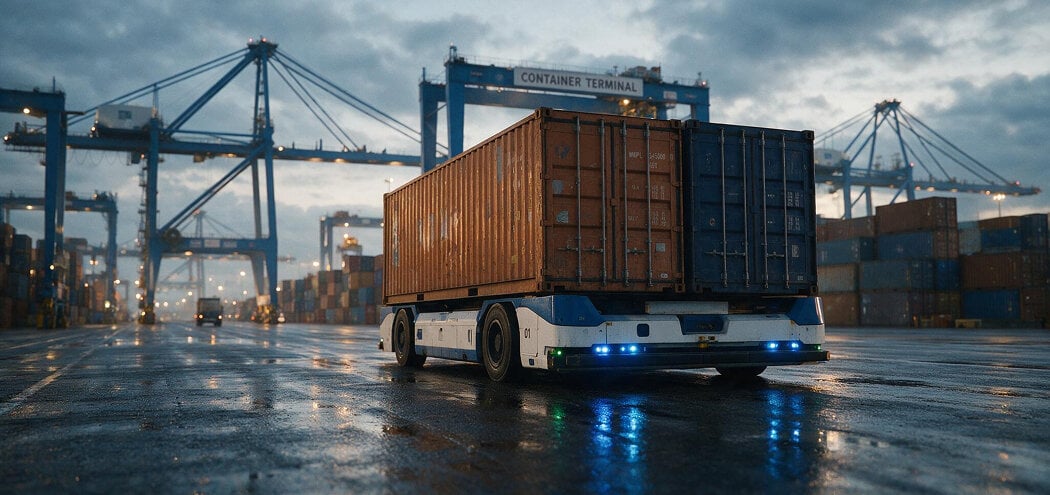
Container terminals run a wide range of vehicles at once, including AGVs moving containers between the berth and yard, terminal trucks passing through weighbridges, and external trucks entering and leaving the port.
To keep traffic flowing smoothly, the TOC uses an AI-assisted dispatch system that combines vehicle recognition, weighbridge data, and real-time traffic conditions to dynamically dispatch AGVs, coordinate truck movements, and cut congestion throughout the terminal.
Supporting up to 2 × 100GbE networking, the APEX-S100 rapidly ingests and aggregates massive volumes of operational data from cameras, weighbridges, and AI dispatch systems, enabling responsive traffic coordination across large-scale port operations.
AI Video Analytics for Yard Operations and Safety
To improve yard efficiency and workplace safety, the terminal deployed a Video Management System (VMS) integrated with IP cameras throughout the yard. The system consolidates live video streams from key operational areas and enables AI-powered container identification through OCR, helping operators quickly locate specific containers and cut retrieval time.
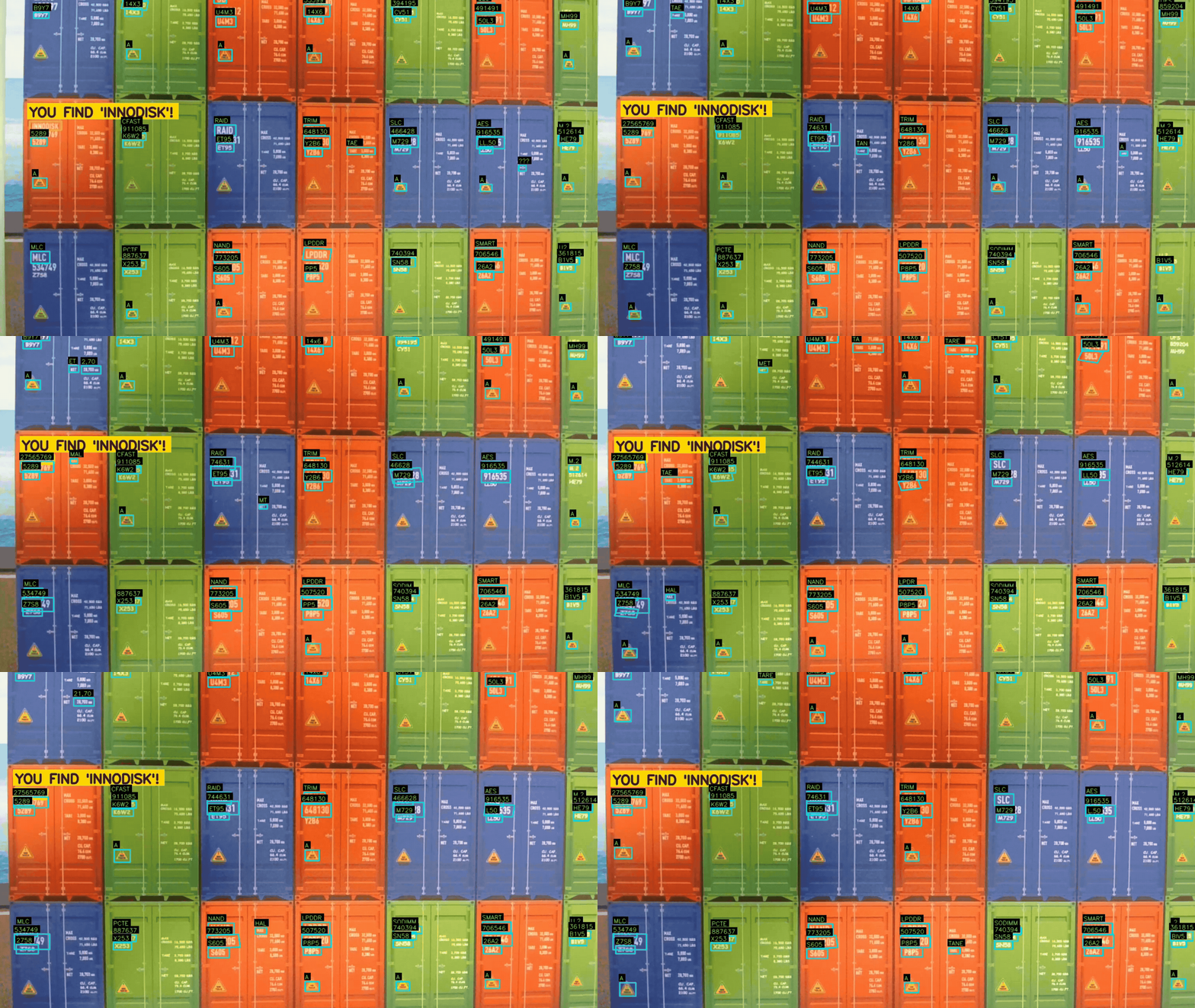
At the same time, AI continuously monitors worker activity to detect unsafe behaviors, such as missing personal protective equipment (PPE) or entry into restricted areas, helping reduce operational risk and improve workplace safety across the yard.
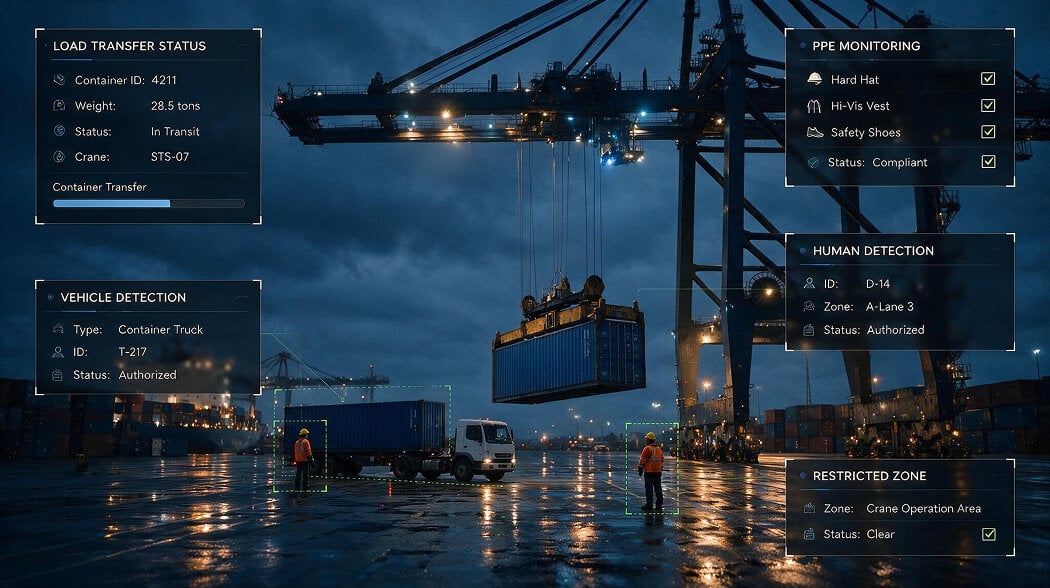
The APEX-S100 serves as the intelligent video analytics platform for the VMS. Supporting up to dual NVIDIA GPUs, it enables high-density, multi-stream video analytics, allowing the system to simultaneously process feeds from multiple IP cameras while performing OCR-based container identification and real-time PPE compliance monitoring. This provides centralized visibility into yard operations, helping improve workplace safety and operational efficiency.
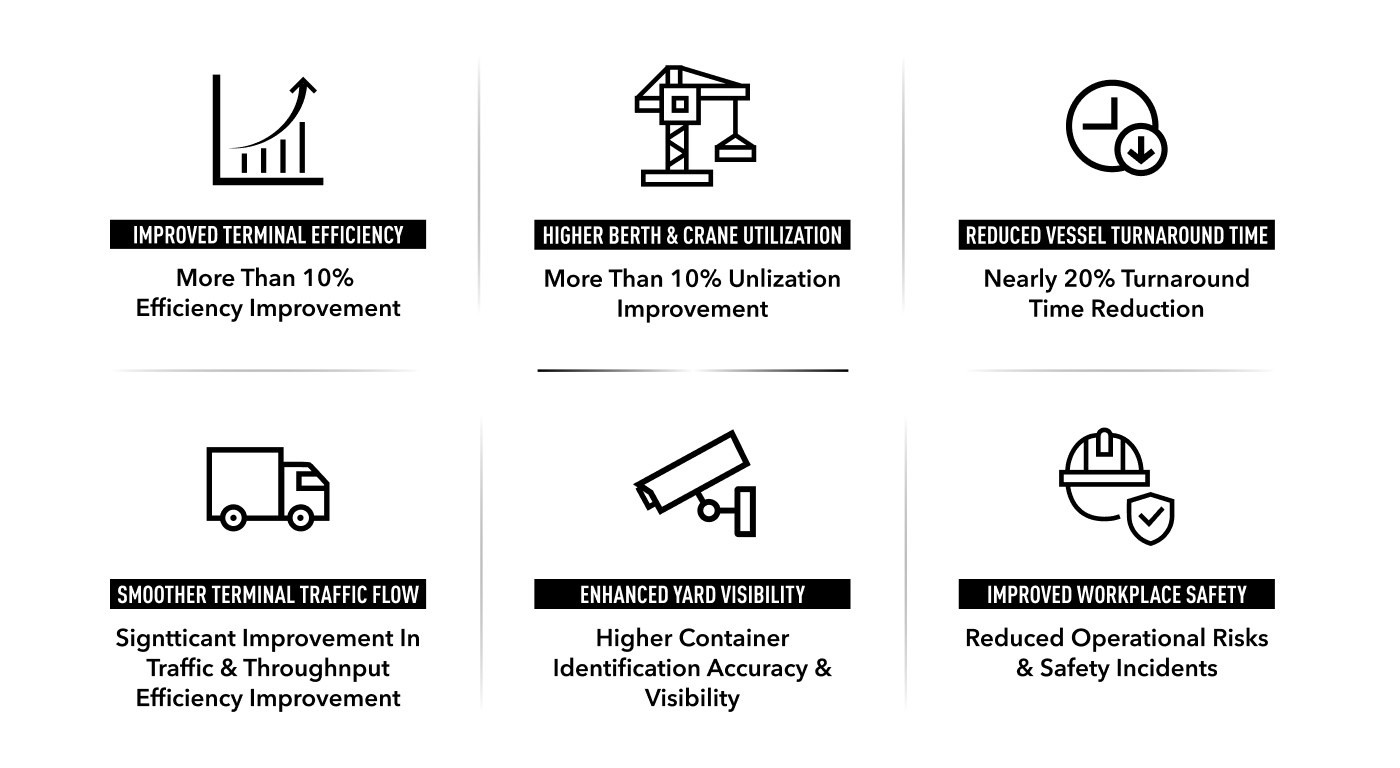
The deployment of the AI-powered Terminal Operations Center delivered measurable gains in terminal efficiency and resource utilization. Berth utilization and crane scheduling efficiency both improved by more than 10%, while vessel turnaround time dropped by nearly 20% — outperforming industry averages and streamlining cargo handling across the terminal.
AI-assisted vehicle dispatching also cut internal traffic congestion and AGV waiting time beyond typical industry benchmarks, while AI-powered video analytics strengthened yard visibility and workplace safety, improving container traceability and reducing operational risk.
Serving as the intelligent foundation of the smart port, the Innodisk APEX-S100 combines high-performance AI computing with Innodisk's expertise in hardware and software integration. Together with flexible customization services, the platform helps customers build AI solutions tailored to their operational needs, accelerating digital transformation while maximizing long-term system value.

Disclaimer: The factory layout and content presented in this article are for demonstration purposes only. Due to confidentiality considerations, certain details may be incomplete or differ from actual conditions.
WARUM INNODISK?
Wir bei Innodisk glauben, dass jede Herausforderung durch Zusammenarbeit bewältigt werden kann. Durch eine enge Kommunikation von der Anfrage bis zur Umsetzung gewährleisten wir eine maßgeschneiderte Lösung, die genau zu Ihrer Anwendung passt. Wir setzen uns weiterhin für Innovation ein und konzentrieren uns dabei kontinuierlich auf die Integration von Hardware, Firmware und Software.